A new day, a new adventure: Life after retirement
17 December 2025
Retirement is often imagined as a long-awaited oasis; no alarms, no traffic, no endless emails. The promise of open days filled with freedom can feel exhilarating. Yet for many, that initial excitement fades when the structure of daily life disappears. Without the routines and responsibilities that once gave rhythm and purpose, retirees can find themselves facing unexpected challenges: boredom, a sense of lost identity, and even loneliness. Research consistently shows that the happiest and healthiest retirees aren’t those who treat every day like a vacation. Instead, they are the ones who intentionally create a rhythm in their lives: blending purpose, activity, social connection, and rest. Retirement, in essence, is not just the end of a career but the beginning of a new chapter that requires a significant amount of planning.

Understanding the psychology of retirement
Retirement is as much a psychological transition as it is a practical one. Several frameworks help explain why this period can be so transformative:
- Role and identity shifts: Work often provides structure, purpose, and a sense of identity. Leaving a long-held role can feel like losing a part of yourself. Replacing these roles with meaningful activities, whether through volunteering, hobbies, or mentoring, is key to maintaining a sense of value and self-worth.
- Continuity and routine: Continuity theory suggests that maintaining familiar patterns of life, relationships, and activities supports wellbeing. By preserving routines, retirees can enjoy stability while gradually exploring new experiences.
- Activity and engagement: Research consistently shows that staying physically, socially, and mentally active enhances life satisfaction and reduces risks of depression. This doesn’t mean constant busyness; even simple activities like daily walks, learning new skills, or joining social clubs can provide enormous benefits.
- Prioritising emotional meaning: Socioemotional selectivity theory highlights that as we age, we naturally focus on relationships and experiences that bring emotional fulfilment. Retirement is an opportunity to consciously choose how to spend your time on what matters most.
Practical ways to thrive in retirement
1. Build a daily rhythm
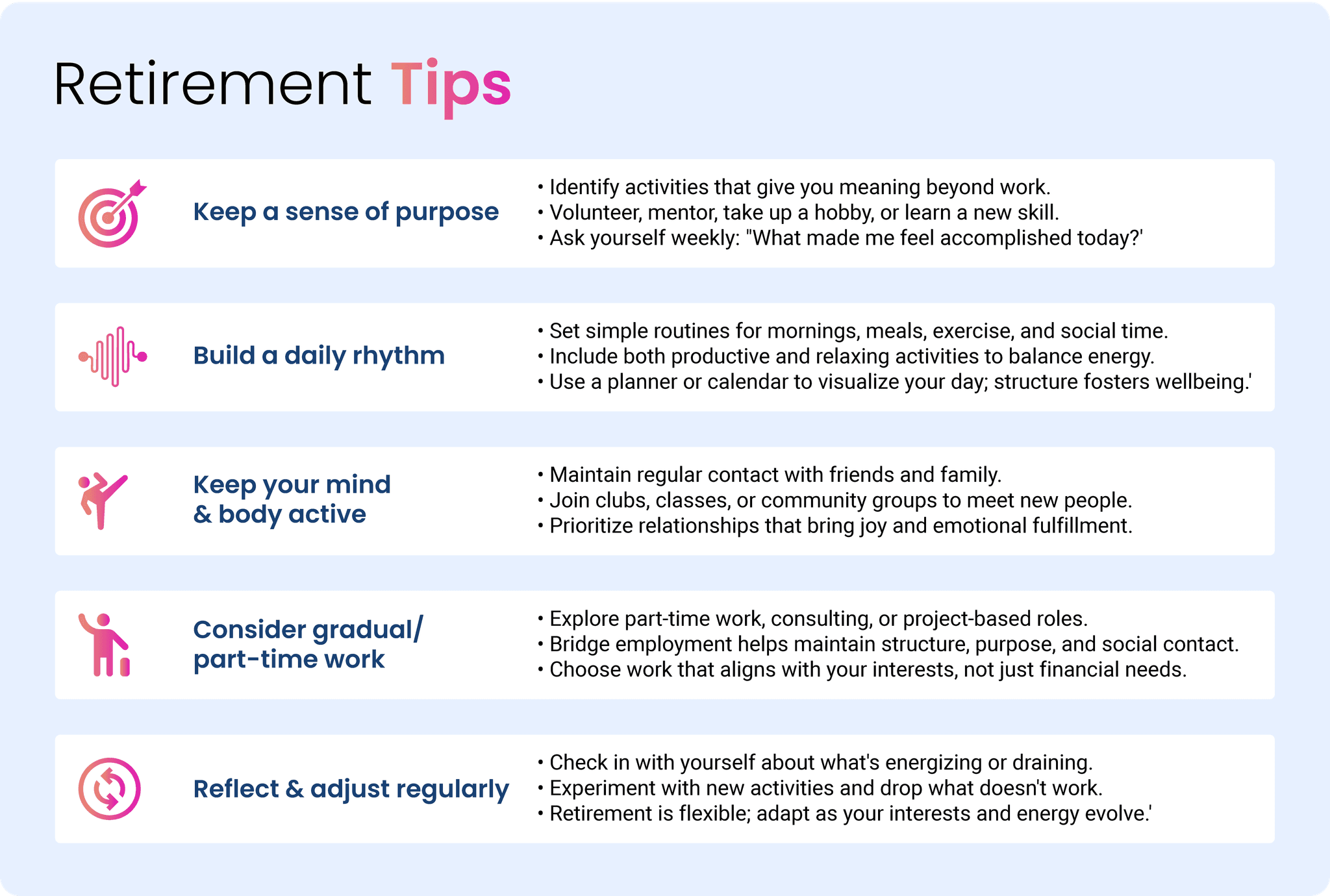
Structure doesn’t mean rigidity. A balanced routine that blends activity, rest, and social interaction can help prevent the “post-retirement slump” and foster a sense of purpose. Even small, consistent habits like your morning walks or coffee with friends, can anchor your day. It doesn’t have to be as strict as your work schedule, but a mix of movement, mindfulness, and planning can make a big difference:
- Wake up at a consistent time to keep your sleep patterns healthy.
- Forms of exercise such as going on walks or doing yoga or cycling can boost energy and mood.
- Plan your day over a cup of coffee or tea.
- Set daily intentions to feel purposeful and focused.
2. Invest in purposeful activities
Consider what gives your life meaning outside of work. This might be creative pursuits, mentoring, volunteering, travel, or personal development. Purposeful engagement not only enhances wellbeing but also reinforces identity and self-worth.
3. Stay physically and mentally active
Exercise, even light activity, supports both physical health and mood, while learning new skills, whether languages, music, or technology, keeps the mind agile and provides a sense of accomplishment. Regular movement is key to staying independent and healthy, so try scheduling it like an appointment. Aim for at least 30 minutes most days, and consider activities such as:
- Morning walks
- Golf, tennis, or cycling with friends
- Group fitness classes for both exercise and social connections
By combining physical activity with mental stimulation and social interaction, you strengthen both your body and mind, helping you stay sharp, active, and engaged.
4. Maintain social connections
Loneliness is a common challenge in retirement, often stemming from the loss of daily social interactions once you leave the workplace. Regular contact with family, friends, and community groups provides emotional support and keeps your mind engaged. To combat isolation, consider scheduling regular social events, such as:
- Weekly dinners or coffee with friends
- Volunteering or getting involved in community groups
- Maintaining a structured social life not only keeps you connected but also boosts your sense of purpose and belonging.
5.
Retirement is a dynamic phase. What feels meaningful in the first year may change over time. Regularly check in with yourself: Which activities energise you? Which feels draining? Adjust routines and commitments accordingly.
6. Remember to relax
While routines and structure are helpful, retirement is also a time to enjoy yourself. Give yourself permission for unstructured moments, whether it’s spending an afternoon reading, painting, or simply relaxing in your garden. The aim is balance, not a rigid schedule.
Embracing the adventure
Retirement is not simply a pause from life; it’s a new adventure. Like any journey, it requires intentional planning, self-awareness, and experimentation. Start small, build routines that feel meaningful, and give yourself permission to explore new identities, hobbies, and relationships. With mindful attention to purpose, activity, and connection, retirement can become not only relaxing but deeply rewarding.
Remember, this chapter is yours to write. The alarm clock may be gone, but the opportunity to craft a life rich with meaning, joy, and connection has never been greater.
How can we 10X Your Future?
Begin your journey to a secure future with 10X Investments. Explore our range of retirement products designed to help you grow your wealth and achieve financial success.