How Unit Trusts work and what investors need to know
12 March 2026
The Living Annuity Masterclass: How to maximise your retirement income


Explore the questions South African investors have about Unit Trusts
Wanting to save for the future, but unsure of the best way to do it? Unit Trusts are a flexible investment tool, and our video answers the most popular questions South Africans have about them.
00:22 What is a unit trust?
01:00 Is a unit trust right for me?
01:59 How do unit trusts work?
03:20 How much does a unit trust pay?
04:09 Do you pay tax on unit trusts in South Africa?
04:28 Why do people choose unit trusts?
04:49 Are unit trusts risky?
05:42 Unit trusts vs mutual funds
06:00 How much does a unit trust cost?
06:49 What types of unit trusts are available?
07:22 Unit trusts vs ETFs
07:49 How to choose the right unit trust
08:13 Are unit trusts good for short or long-term investing?
08:36 What next for my unit trusts?
Have more questions on Unit Trusts? Check out our Unit Trust FAQ page.
Do your Unit Trust sums with our calculator
Whether you’re saving for a property, your child’s future education, or simply aiming to grow your wealth, our investment calculator helps you estimate the monthly contributions needed to reach your target and the potential value of your investment over time.
Stop paying high fees, and make Future You more money
Higher fees very likely means lower returns (and here's the maths to prove it)
Paying high fees on your retirement investments (such as a retirement annuity or a living annuity) almost always means less money in your pocket, and less money for your retirement. Read more
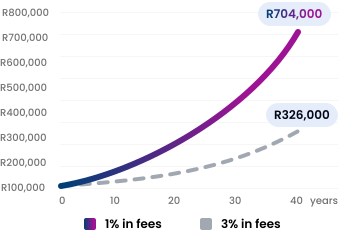
A small percentage saving on fees, although seemingly inconsequential, could mean significantly more money for you in the future. Let’s look at an example to compare higher fees (3%) with lower fees (1%) to help illustrate this.
- Investment period of 30 years
- Initial lump sum investment of R50,000
- Monthly contributions of R2,000
- Return of 12% per annum
- An inflation rate of 4%
Example 1 (1% Fees): Real investment value is approximately R2 million
Example 2 (3% Fees): Real investment value is approximately R1.4 million
Always make sure you understand your Effective Annual Cost (EAC). This will be shown on your statement or you can request it from your service provider. EAC is a standardised metric that was introduced by ASISA. All else being equal, a higher EAC would mean that less of your investment returns can be reinvested and potentially grow and compound over time.
At 10X, we keep our fees low, so that more of your money is invested for you. If you've got investments elsewhere, you can use our EAC calculator to compare service provider fees with 10X.
Or click below to get a free comparison report from our investment consultants, who are always available to give you the facts on your investments, at no cost to you.
9 out of 10 people do better with 10X
Related articles



How can we 10X Your Future?
Begin your journey to a secure future with 10X Investments. Explore our range of retirement products designed to help you grow your wealth and achieve financial success.